

The World Looks Back
Short film program with Andrés Khamis, Francisca Khamis, Isaac Martínez, Caroline Monnet, Nnenna Onuoha, Amin Pakparvar, Mehraneh Salimian
Event
28 August 2026, 20:00 Free entry
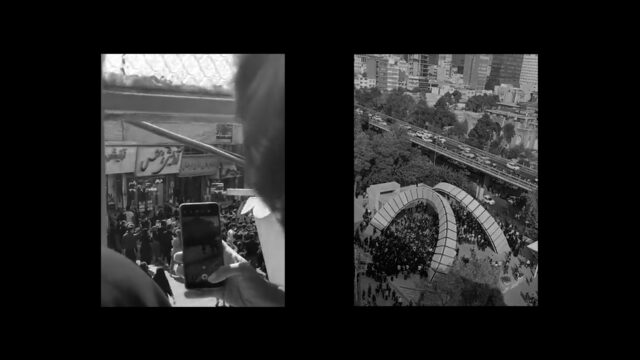
Image: Still from Memories of a Window – Mehraneh Salimian & Amin Pakparvar, 2026
The World Looks Back describes a shift in perspective: it is not only us who look—our gaze is also returned. Images, testimony, bodies, as well as individual and collective expression, create forms of perception in which the world reacts and responds. The gaze does not remain calm, but becomes unstable. The programme presents short films between experimental film, dance film, documentary, and artistic film practices.
The films explore protest and everyday life, cultures of memory and institutional power, experiences and voices from Black, feminist, Indigenous, diasporic, and decolonial perspectives. Here, resistance and histories become tangible without being fixed into a single reading.
The Klosterruine, as a historical site, together with the installation and its layered contexts, forms a resonant space in which the film works encounter one another and enter into relation with each other as well as with the audience. At the centre is the question of how we look—and what happens to us in the act of looking. What remains, what changes? Who looks, who tells the story, and who becomes visible? The short film programme makes this experience tangible: what we see continues to act—within our perception and in how we read the world.
The programme is curated by Canan Turan.
Filminfos and synopsis
Black Youth
4 min, 2023, Germany
By Isaac Martínez
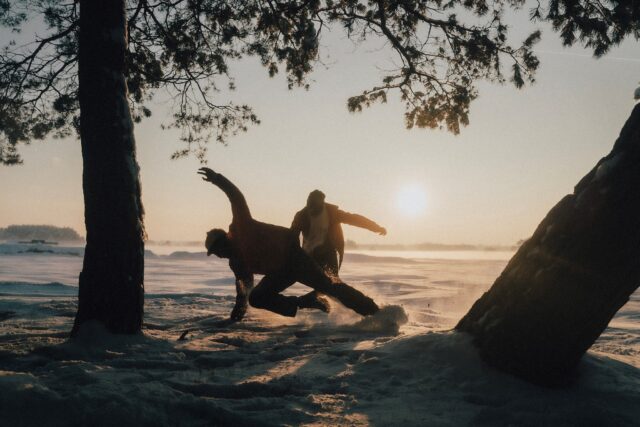
Image: Still from Black Youth – Max Baumeister, 2023
Black Youth engages with the coming of age of young Black people in a Western society shaped by white and heteronormative structures. Set against a snow-covered landscape, the film combines striking images of young Black men with spoken poetry on racism and exclusion, as well as on the anger and grief of being marked as “other.” Between vulnerability and resistance, personal experience condenses into a shared condition. At its centre lies the question of how Black voices can be heard in a white majority society.
The Memory Guardians
13 min, 2024, Germany
By Nnenna Onuoha
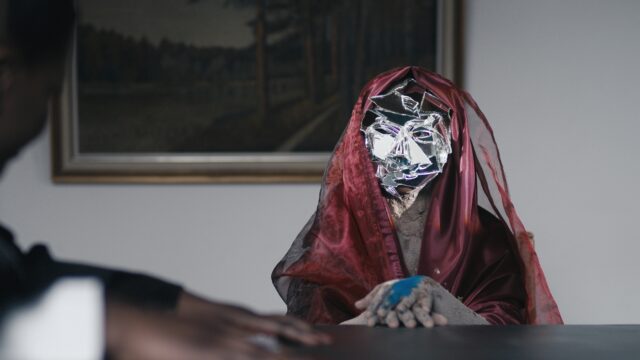
Image: Still from The Memory Guardians – Nnenna Onuoha, 2024
What should happen to the statue of the kneeling woman, which has been read as racist, damaged, and eventually relocated to a museum? In the fictional court of the “Memory Guardians,” this question is brought to trial. The positions diverge widely: ranging from public display as a warning against “left-wing extremism,” to long-term storage in a study depot for historical contextualisation, to demands for its destruction. At the same time, the statue itself emerges as a voice of its own.
Memories of a Window
19 min, 2026, USA / Iran
By Mehraneh Salimian & Amin Pakparvar
Image: Still from Memories of a Window – Mehraneh Salimian & Amin Pakparvar, 2026
Is a revolution possible when it is only visible through windows and screens? Following the crackdown on protests in Iran, students and civilians begin documenting events from inside apartments and cars. From these fragmented recordings, an alternative archive gradually emerges, countering the official narrative with the images and experiences of civilians. When a protester is killed while filming, a film student writes her a letter. Memories overlap with shaky, anonymously shared footage from interior spaces and thresholds between private and public.
Pidikwe
10 min, 2025, Canada
By Caroline Monnet
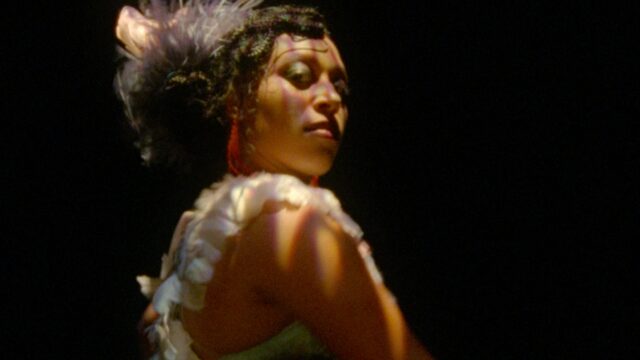
Image: Still from Pidikwe – Caroline Monnet, 2025
Traditional and contemporary dances by Indigenous women from different generations are woven into an audiovisual flow between film and performance. Shot on analogue film, the work by Canadian Anishinaabe* artist and filmmaker Caroline Monnet engages with the aesthetics of 1920s cinema and moves between present and past, which overlap through dance. At its core lies a reflection on the representation of Indigenous women in relation to colonial visual regimes.
*Anishinaabe is the cultural and political designation of several First Nations in North America.
Baisanos
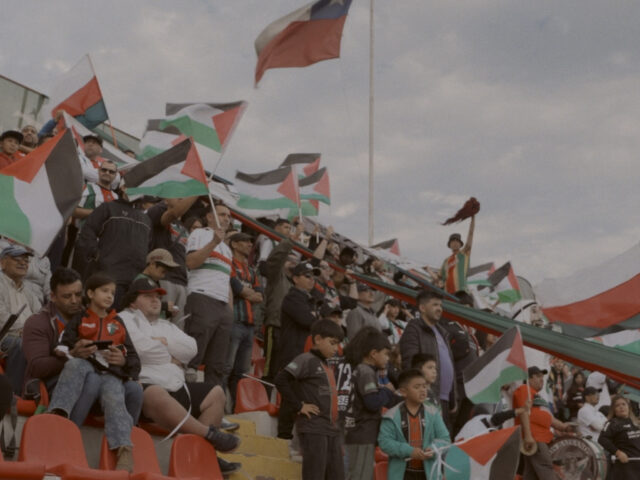
14 min, 2025, Chile, Palestine, Spain
By Andrés Khamis Giacoman & Francisca Khamis Giacoman
Image: Still from Baisanos – Andrés Khamis Giacoman & Francisca Khamis Giacoman, 2025
Within the world of the football club Deportivo Palestino and its passionate fan community, Baisanos explores the connections between Chile and Palestine, as well as the ways in which identity, belonging, and memory are carried across generations and borders. The film follows voices from the Palestinian diaspora for whom football extends far beyond sport: as a space of community, solidarity, and cultural self-assertion, where wearing the colours of Palestine becomes an act of resistance. Between stadium chants, symbols, and personal stories, a space unfolds between observational closeness and poetic narration.
About the curator

Canan Turan, Photo: Taya Raevskaya